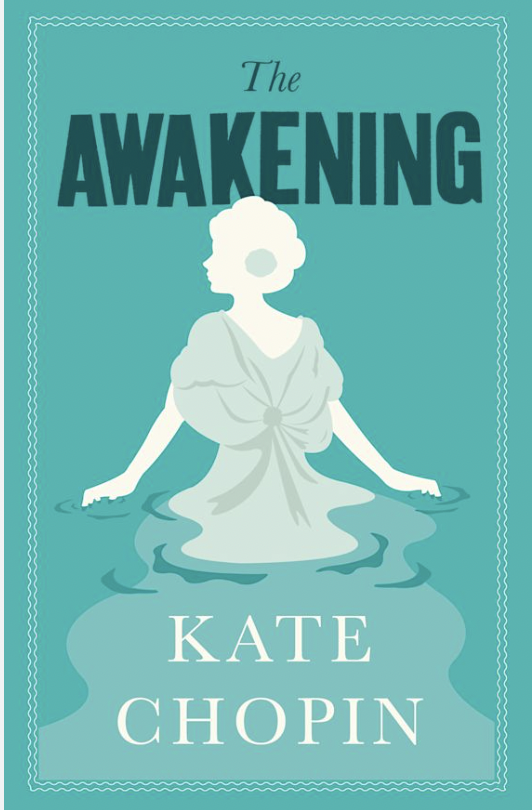
by kate chopin | 195 pgs | 4.75 stars
genre: feminist fiction, novella
(no spoilers)
picture this: it’s the 19th century and you’re a dissatisfied housewife, whose ambitions have gone by the wayside and whose marriage is nothing but stifling, but all of the contemporary literature leads you to believe that your dissatisfaction is a fact of life and that you’re not suppose to voice anything other than pleasantries. enter: the awakening by kate chopin, a work that caused genuine tidal waves in late victorian audiences.
first published in 1899, the awakening was greeted with critical outrage and clearly times haven’t notably changed given its shockingly low goodreads rating. the awakening openly discussed extra-marital affairs, female sexuality, and displeasure with the female condition in ways that were almost unheard of during that time period, hence the widespread dislike and in some cases outright censoring and banning of the novel.
the awakening follows edna, a woman who is “waking up” to the unhappy reality of the life she has been condemned to. to put it simply, her husband sucks. here is a revealing excerpt of what he says to edna when she gets a sunburn: “‘you are burnt beyond recognition,’ he added, looking at his wife as one looks at a valuable piece of property which has suffered some damage.” and that literally happens on page five. he sucks from start to finish. the bulk of the novel takes place in a vacation community called grand isle and it is there that edna grows close to a man named robert. robert inspires sexual desires and physical freedom that edna has never experienced before.
a lot of critics of the awakening claim that edna is an unlikeable protaganist. she doesn’t seem to like her children very much and cheats on her husband. but to me, there’s another way to look at it: edna seems to feel a lack of self expression in her life due to her role as a married mother which actually causes her a general disinterest in her children and her husband thereby making her almost disinterested in herself. her husband sees her as property and while she may not see herself as property, she doesn’t seem to see herself as an individual. she feels prompted to home-make not because it is what she wants to do or what she thinks is right, but because of optics. she is without a true identity and therefore finds herself looking to those around her for direction. the subversion of identity is mainly shown to be for the benefit of husbands but as the children are an offshoot of the marriage they become a physical representation of the self agency that was lost.
the second part of the novel takes place in edna’s home in new orleans and in her post robert life edna finds herself slacking off on her “wifely duties.” as well, the more vocal edna gets about her awakening, the more resistance she faces from her husband and friends alike. the more time edna spends trying to discover her passions and what activities she truly enjoys, the less the people around her enjoy her company. perhaps chopin is arguing that the answer to female liberation is removing oneself from society altogether.
there is a lot that can be gained from reading a novel like the awakening. for one thing, it is a window into the past that can help us understand what generational issues persist in the future. for another thing, maybe edna isn’t the most likeable character, but she’s human–one of the most realistic and honest characters i have ever read. important discussions about notions of identity in relation to motherhood, sexuality, and marriage can be hosted based on the issues brought up by the awakening and i experienced that first hand in a classroom setting. despite what the critics may say i recommend that every reader at least give the awakening a chance.

 adele reads